Jump to a chapter
Meet Leona
This chapter shows: Patient context · Problem framing
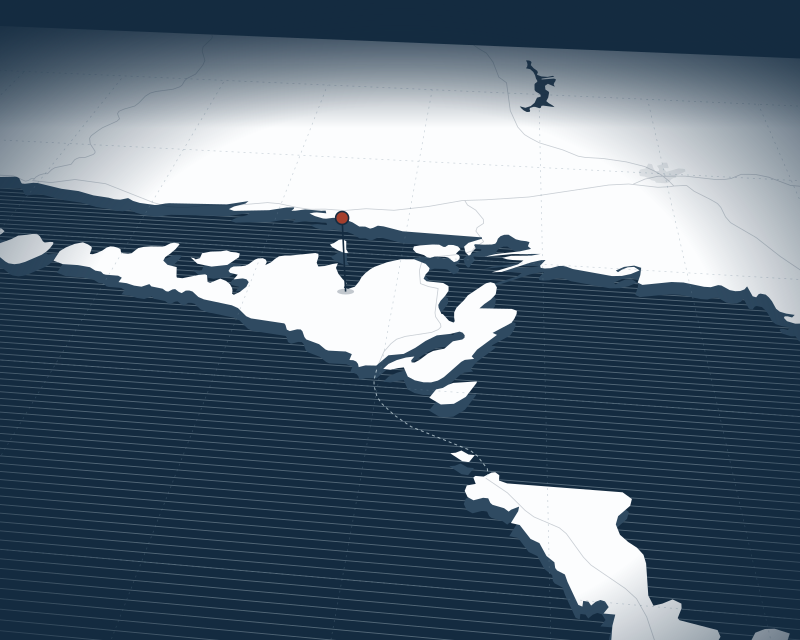
Leona Debassige is a 28-year-old Ojibwe woman and a member of M’Chigeeng First Nation on Manitoulin Island, where she was born and raised on reserve. She was recently accepted into medical school at Toronto Metropolitan University and had to move to the Peel region, into a student apartment building in Brampton.
Revised from outline Exact residential address removed (brief: keep geography at Brampton/Peel). Spelling: “Manitoulin”, “M’Chigeeng First Nation”.
Team to confirm “Born and raised on reserve” is highlighted for confirmation in the outline.
She never really felt she had a family doctor. The only physician on reserve is a non-Indigenous family doctor who locums at the M’Chigeeng Health Centre now and then. Leona mainly saw Indigenous nurses and nurse practitioners, and when she needed culturally competent care she was connected with the Traditional Health and Community Wellness program, where she could meet with an Elder, attend a sweat lodge or take part in a full moon ceremony. When she needed a physician or a specialist, she had to leave the reserve, sometimes for days or weeks.
Team to confirm Confirm staffing details and “days or weeks” (highlighted in the outline).
Indigenous advisor Review how the Traditional Health program and ceremonies are described.
That’s how it went with her first migraine diagnosis. Leona has had migraines since she was a teenager. For the last few years they’ve been rare, and she has managed them with rest, a dark room and over-the-counter painkillers.
Being treated on reserve, and in places that saw a lot of Indigenous patients, Leona never had to worry about how she would afford medication. As a “status Indian” she is covered by the Non-Insured Health Benefits (NIHB) program1.
Indigenous advisor Confirm use of the term “status Indian” (kept in quotation marks, as in the outline).
NIHB guidanceWhat NIHB covers
Official guidance Draft, pending review
What NIHB covers
NIHB gives registered First Nations and recognized Inuit coverage for a specified, nationally consistent range of health benefits that are not otherwise covered by provincial or territorial health insurance, private insurance plans, or other publicly funded plans or programs.
Benefit areas include pharmacy (prescription drugs and select over-the-counter products), vision care, dental care, mental health counselling, medical supplies and equipment, and medical transportation to reach medically required services not available on reserve or in the community of residence.
- [1] About the Non-Insured Health Benefits programIndigenous Services Canada · page modified 22 Sep 2026 · checked 30 Oct 2026
- [2] NIHB Pharmacy Benefits GuideIndigenous Services Canada · page modified 7 Oct 2026 · checked 30 Oct 2026
Revised from outline The outline’s quotation (“limited range…”, “crisis intervention…”) does not appear on the current ISC page. Rewritten from the page as modified 22 Sep 2026.
Clinical-policy review Check benefit wording against the current page before release.
Back home, NIHB was easy. Everyone knew how it worked, and the pharmacy billed it directly, so Leona never had to think about the cost of her prescriptions while writing her MCAT or her TMU application. The only claims she filed herself were for medical transportation when she had to leave the reserve for care, and even those meant hunting down a pile of receipts.
NIHB guidanceMedical transportation
Official guidance Draft, pending review
Medical transportation
NIHB’s Medical Transportation Policy Framework sets out how the program funds eligible registered First Nations and recognized Inuit clients to reach medically required health services that are not provided on reserve or in their community of residence.
- [7] NIHB Medical Transportation Policy Framework (Interim)Indigenous Services Canada · page modified 1 Dec 2022 · checked 30 Oct 2026
- [8] Medical Transportation Policy (2005)M’Chigeeng First Nation
Revised from outline The outline cited M’Chigeeng’s 2005 policy. The current federal framework (labelled Interim, modified 1 Dec 2022) has the same objective wording and is cited first.
Clinical-policy review Transportation wording pending policy review (brief).
View the chapter map
A move, and a new system
This chapter shows: Patient context · Problem framing
Leona has never lived in Brampton or anywhere in Peel, but she knows there is a large urban Indigenous community in the GTA, with many organizations. A month into her program, she still hasn’t found a new family doctor.
Two months in, the workload is picking up and the weather is getting colder. She still hasn’t found a family doctor, and if she gets sick, she can’t afford the 10+ hour drive back home.
Team to confirm Confirm the travel time; routing estimates vary by season and route. The brief asks for no invented travel times.
With the little time and energy her coursework leaves, Leona knows she won’t submit claims for reimbursement if a pharmacy doesn’t bill NIHB directly. Her measly OSAP funding only covers two months of rent. In September she opted out of the student health plan, using her status card as proof of coverage, and she can’t afford to go unreimbursed. She would rather keep food on the table than “waste money” on her health care when she knows it is a federally recognized treaty right.
Team to confirm Confirm the OSAP detail and the student-plan opt-out process (brief: financial details).
Indigenous advisor The treaty-right framing is Leona’s view; confirm the wording.
NIHB guidanceDirect billing and reimbursement
Official guidance Draft, pending review
Direct billing and reimbursement
Providers enrolled with NIHB can bill the program directly, so clients don’t pay upfront. Clients who pay a provider themselves for an eligible benefit can submit a claim through NIHB’s client reimbursement process.
- [1] About the Non-Insured Health Benefits programIndigenous Services Canada · page modified 22 Sep 2026 · checked 30 Oct 2026
- [3] NIHB pharmacy benefitsIndigenous Services Canada · page modified 7 Oct 2025 · checked 30 Oct 2026
Clinical-policy review Added from the ISC pages; not in the outline. Review before release.
View the chapter map
At the clinic
This chapter shows: Health-system mechanism
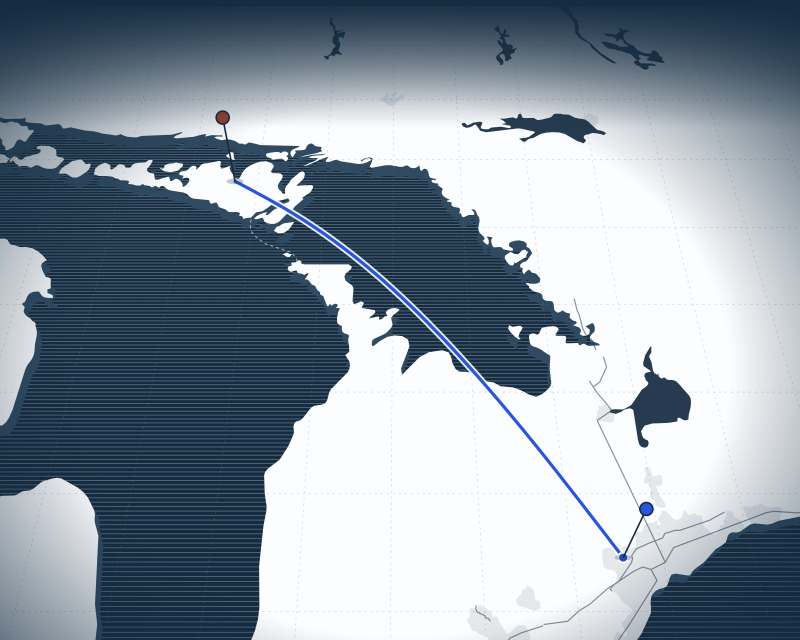
By mid-November, stress and too little sleep have brought Leona’s migraines back, with attacks coming at random. She looks up the nearest walk-in clinic and heads over. At the front desk she hands over her health card and asks the receptionist, “Is your clinic familiar with NIHB?” The receptionist gives her a blank look. “Umm… I don’t know what you’re talking about.” Leona goes ahead with the appointment, hoping for the best.
Original research Omitted from release
Family practice audit
The number of practices is blank in the outline, so this result is omitted. Supply the denominator, dates and method to include it.
Data The public map has a “Surveyed Physicians” layer with 36 named physicians and CPSO numbers. Do not treat 36 as the practice count without confirmation, and review whether naming individuals alongside this finding is appropriate.
The doctor prescribes Nurtec (rimegepant), a newer tablet for treating migraine attacks. When Leona asks whether NIHB covers it, the doctor says the pharmacy will sort it out.
Clinical-policy review Confirm the drug description.
Who is eligible for NIHB? optional
Official guidance Draft, pending review
Eligibility
To be eligible, a person must live in Canada and be a First Nations person registered under the Indian Act, an Inuk recognized by an Inuit land claim organization, or a child under 2 whose parent is NIHB-eligible.
Eligibility depends on registration or recognition. It does not extend to every Indigenous person.
- [4] Eligibility for the NIHB programIndigenous Services Canada · page modified 28 May 2026 · checked 30 Oct 2026
Clinical-policy review Check wording against the eligibility page.
View the chapter illustration
Calling pharmacies
This chapter shows: Health-system mechanism · Original evidence
Not knowing whether the pharmacy the clinic recommends bills NIHB directly, Leona calls ahead so she doesn’t waste time pharmacy hopping. The closest one says, “Oh, you’re asking me? What’s the program? No, we don’t do that here.”
She is filled with anxiety: I should say something, they should know what NIHB is… but do I even have the energy for that? She doesn’t have the capacity to explain Indigenous health benefits to a stranger over the phone, so she keeps calling around.
Original research Unverified draft finding
Pharmacy telephone audit
5 of 14 pharmacies reported being unfamiliar with NIHB when called.
Not yet a published statistic: call dates, question wording and the dataset haven’t been supplied.
View the chapter map
At the counter
This chapter shows: Health-system mechanism
Leona finally finds a pharmacy that bills NIHB. She heads there right away, but when the pharmacy technician submits the claim, it is rejected within seconds.
NIHB guidanceHow NIHB decides a drug claim
Official guidance Draft, pending review
How NIHB decides a drug claim
NIHB’s pharmacy benefit covers drugs and other eligible products listed on its Drug Benefit List.
Exception products are not on the list. They may be approved in special circumstances through a prior approval request, which the pharmacy starts with NIHB’s Drug Exception Centre.
- [2] NIHB Pharmacy Benefits GuideIndigenous Services Canada · page modified 7 Oct 2026 · checked 30 Oct 2026
- [3] NIHB pharmacy benefitsIndigenous Services Canada · page modified 7 Oct 2025 · checked 30 Oct 2026
Revised from outline The outline said NIHB “pays only for drugs on its Drug Benefit List” and that “some exception drugs are not on the list”. Reworded: exception products are by definition off the list and can still be approved (brief: don’t repeat “covers only listed drugs”). The claim that every claim is checked in real time at the counter was removed; the guide states point-of-sale adjudication for specific drug classes.
Clinical-policy review Review against the Pharmacy Benefits Guide, s. 2.0 and 2.4.
The pharmacist explains that they’ll call NIHB’s Drug Exception Centre. The Centre will likely fax a form to the doctor who wrote the prescription: a walk-in doctor who met Leona once and may not be on shift again. She’ll have to wait a few days for a decision.
Revised from outline “in Ottawa” removed: only an undated legacy page states the Centre’s location.
Because the Centre is open, NIHB could recover the cost of an emergency supply dispensed now, so the pharmacy doesn’t give her one in the meantime, and she can’t afford to pay full price. Leona goes home, overwhelmed and in pain.
Revised from outline The outline said the pharmacy “can’t give her an emergency supply”. Reworded so a reimbursement rule is not presented as a ban on dispensing (brief).
Clinical-policy review Confirm emergency-supply wording (Pharmacy Benefits Guide, s. 3.7).
NIHB guidancePrior approval and emergency supply
Official guidance Draft, pending review
Prior approval and emergency supply
To request prior approval, the pharmacy gives the Drug Exception Centre details about the prescription, prescriber, client and pharmacy. The Centre may fax a request form to the prescriber, and the review time depends on how quickly the prescriber provides the required information.
An exception can be approved when the prescriber’s completed request form shows, for example, that the drug is for a recognized indication and dose supported by published evidence or authoritative opinion; that there is significant evidence it is superior to listed products; that the client had an adverse reaction to a best-price alternative; or that available alternatives are ineffective or contraindicated. Personal preference alone does not justify coverage.
If a product needs prior approval and the Centre can’t be reached (for example, on statutory holidays or outside regular hours), a pharmacy may dispense up to a 14-day emergency supply without prior approval. Claims for emergency supplies dispensed while the Centre is open are subject to recovery.
- [2] NIHB Pharmacy Benefits GuideIndigenous Services Canada · page modified 7 Oct 2026 · checked 30 Oct 2026
Revised from outline Criteria rewritten from s. 2.4; the guide does not say all of them must be shown. The emergency-supply rule is framed as a claim condition (s. 3.7).
Clinical-policy review Precise drug and emergency-supply wording pending review (brief).
ExplainerHow prior approval works
The prior-approval loop
From the NIHB Pharmacy Benefits Guide 2
Claim rejected at the counter. The drug needs prior approval, so the claim doesn’t go through.
Unverified claim …It turns out Nurtec isn’t on NIHB’s Drug Benefit List.
Revised from outline The outline’s next sentence, that the newer migraine drugs NIHB covers “are all for preventing migraines”, was removed (brief: avoid the broad newer-drugs claim).
Clinical-policy review Not verified. The live Drug Benefit List could not be read on 30 Oct 2026. Check the rimegepant (Nurtec ODT) entry by hand, record the date and listing status, then approve.
If the Centre says no, Leona has the right to appeal6.
Revised from outline The outline predicted an appeal was unlikely to succeed and named her “fastest option”. Both removed (brief: no predicted appeal outcomes or fastest-option claims).
Discussion prompt · optional, unscoredWhere did coverage stop becoming access?Show a systems explanation
There isn’t one moment. Leona’s coverage never lapsed. What failed were the handoffs between people who each held one piece of it: a clinic that didn’t recognize the program, pharmacies that couldn’t say whether they bill it, a prescription written without knowing its listing status, and an approval process that runs back through a prescriber she may never see again.
Each handoff belonged to someone else. When no one owned it, the work fell to the patient, at the moment she had the least capacity to do it.
View the chapter illustration
What the audit tells us
This chapter shows: Original evidence · Limitations
Leona’s story is one patient’s path. To see whether her experience with pharmacies was unusual, the team called every pharmacy listed for her postal area and asked about NIHB.
Original research Unverified draft finding
5 of 14 pharmacies reported being unfamiliar with NIHB when called.
Figure withheld until the dataset is approved
The 14-symbol figure appears only once the call log, dates and question wording are supplied and approved. The draft numbers are shown as text above, labelled unverified.
- Who was called
- Pharmacies listed on the Ontario College of Pharmacists (OCP) website for Leona’s postal code area (L6T).
- How
- Telephone calls to each listed pharmacy (per outline). Protocol not yet supplied.
- Question asked
- Not yet supplied
- When
- Not yet supplied
- Dataset
- Not yet supplied
Limitations
- One postal area. The result describes these 14 pharmacies, not Brampton, Peel, Ontario or Canada.
- Fourteen calls is a small sample; it supports description, not statistical inference.
- Each answer came from whoever picked up the phone at one moment. It is not a measure of a pharmacy’s enrolment with NIHB or of every staff member’s knowledge.
- Being familiar with NIHB does not show that a pharmacy bills it directly, that a given medication is covered, that it is in stock, or that approval will be granted.
- The sampling frame is the OCP listing on the search date; listings can be incomplete or change.
Data Supply the call log (CSV), call dates, exact question wording, who called, number of attempts and how “no idea” was coded.
Data Confirm whether the OCP search used the full postal code or the L6T area.
Data The map layer “NIHB-Supported Pharmacies” has 9 records. Confirm what “supported” means (reported familiar? confirmed direct billing?) and supply response fields for all 14.
What it shows is narrow on purpose: in one postal area, a patient calling around could not count on the first pharmacy she reached to recognize the program. It does not measure how many pharmacies bill NIHB, which drugs they stock, or how often prior approval is granted.
View the chapter illustration
What could change
This chapter shows: Proposed intervention · Evaluation plan
Each barrier in Leona’s story sits at a handoff. These proposals give each one an owner, a way to check the process happened, and an outcome worth measuring. They are proposals: none has been implemented or evaluated.
| Barrier | Proposed action | Owner | Process measure | Outcome measure | Limitation |
|---|---|---|---|---|---|
| The clinic didn’t recognize the program | NIHB orientation for front-desk and clinical staff | Clinic lead | Staff who complete the orientation | NIHB inquiries routed correctly | Training may not change behaviour, and staff turnover erodes it. |
| No one could say which pharmacies bill directly | A dated record of nearby pharmacies that confirm direct NIHB billing, re-checked on a schedule | Named data maintainer | Records reviewed on schedule | Repeat calls a patient needs before reaching a pharmacy that bills directly | Billing reports go stale, and a phone confirmation can still be wrong. |
| Prior approval depended on a prescriber she might not see again | Name who owns the next step when a claim needs prior approval | Care team (prescribing clinic and pharmacy) | Ownership recorded for each request | Time to an appropriate next step | Timing depends on several parties, including the Drug Exception Centre. |
Denominators, data sources and collection methods would be defined when an evaluation is designed.
View the chapter illustration
Take the next step
This chapter shows: Problem framing
Leona’s story doesn’t end with a solution, and this site doesn’t pretend it does. Her coverage was real on paper. Using it depended on people and processes that weren’t set up to carry it.
Find a pharmacy on the mapPharmacies near Leona’s postal area, as a map and an accessible list.
Open the patient guideA guide for patients to take with them, with official NIHB links.
Covered on paper, not in practice. Closing the gap means making each handoff someone’s job, not the patient’s.